












































Beauty Industry Market Analysis
AIndustry reports paint a picture of a large and steadily growing beauty sector, although different research experts measure the market in different ways.
According to Market.us, the global beauty salon industry is valued at approximately $198 billion in 2025 and could reach $443.9 billion by 2035, reflecting projected annual growth of 8.4%. This estimate includes the entire salon ecosystem, from independent operators and solo professionals to large chains and franchise systems.
DataIntelo focuses specifically on franchised beauty businesses and values that segment at $57.4 billion in 2025, with projected growth to $98.6 billion by 2034 at a CAGR of 6.2%.
Regional trends also vary. North America remains the largest franchised beauty market, accounting for approximately $21.1 billion in revenue, or 36.8% of the global franchised segment. Asia-Pacific is expected to deliver the strongest growth, with forecasts calling for an 8.1% CAGR driven by expanding beauty industries in markets such as China and India.
Although the numbers differ, both studies point to the same broader trend: beauty services continue to benefit from repeat customers, recurring appointments, and retail product sales. At the same time, market growth does not automatically translate into franchise success, making brand-level performance, franchise turnover, and financial disclosures just as important as overall industry trends.
What Franchisees Receive in Return for Royalties
Independent salons can be successful, and many of them are. Well-run independents in established neighborhoods can outperform some franchise units in the same market. The franchise model trades a percentage of revenue and a layer of brand control for five distinct services an independent owner would otherwise have to build from scratch.
- Brand recognition speeds up the customer-acquisition phase. New franchise locations open with an existing brand awareness, whereas an independent typically needs 12–24 months and expensive advertising to develop.
- Operational manual. Pricing, scheduling, retail layout and client onboarding are standardized, the franchisee gets a ready-made guide.
- Supplier contracts lock in product costs at chain-level pricing.
- Marketing fund contributions of 1–2% of revenue goes to national campaigns that help promote new locations.
- Protected territory defends franchisee from the same brand competitor within the established area.
The trade-off is straightforward: in exchange for the royalty and brand-system restrictions, the franchisee shifts part of operational risk to the franchisor's system. To know whether that trade-off will work for a franchisee, it is best to consult the FDD, especially Item 19 and Item 20.
How the Beauty Categories Differ
The beauty salon franchise sector includes eight distinct categories. Each has its own unit economics, build-out, customer acquisition and retention strategies, and staff requirements.
Hair salons — the largest revenue segment
Hair services historically account for the largest share of salon revenue worldwide (industry estimates from IBISWorld and Statista place the share between 42% and 55%, depending on segmentation). The model runs on volume, walk-in traffic and tickets of $25–$60.
Investment is moderate: Great Clips opens from $136,900, Supercuts from $151,370. Hair has shown lower cyclical sensitivity than tanning or med spa in past downturns, per IBISWorld data.
Nail salons — the high-frequency niche
The U.S. nail industry generated approximately $11.3 billion in revenue in 2023, supported by growing demand for gel manicures, structured manicures, and premium nail treatments. Many customers return every two to three weeks for services. Build-out is compact, footprint small.
Brands like A Perfect 10 Nail & Beauty Bar and Frenchies Modern Nail Care are perfect examples of nail salon franchises.
Waxing and hair removal — the membership-driven model
Waxing franchises are often built around membership programs designed to encourage regular appointments and repeat visits. Industry leaders such as European Wax Center, LunchboxWax, Uni K Wax, and Ideal Image have helped popularize this model across North America.
Investment requirements typically range from approximately $180,000 to more than $551,000, depending on the brand and service.
While the category continues to attract customers seeking professional hair-removal services, investors should look beyond membership numbers alone. Even large systems can experience periods of slower growth or unit closures. For example, European Wax Center reported a net decline in locations during fiscal 2025 despite remaining one of the category's most recognized brands.
Lash and brow studios — high growth, repeat visit
Lash and brow concepts have expanded rapidly over the past decade, driven by growing demand for eyelash extensions, brow shaping, and other specialized beauty services. The business model benefits from frequent maintenance appointments, with many clients returning every few weeks.
Leading brands include Amazing Lash Studio, The Lash Lounge, Deka Lash, and J'adore. Most concepts require an investment of roughly $200,000 to $350,000.
Although the category has experienced strong growth, competition has also increased. Some franchise systems have reported declining unit counts in recent years, highlighting the importance of evaluating individual brand performance rather than relying solely on overall market trends.
Tanning salons — a mature segment
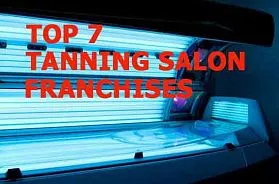
Tanning has retained some demand thanks to safer spray-tan technology and sunless solutions. Leading franchises, like Palm Beach Tan and Sun Tan City, require $450,000+ investment. They generate strong AUV with low labor intensity.
Industry data consistently shows tanning franchise unit counts well below their 2008–2010 peak, driven by health concerns, indoor-tanning regulation and shifting consumer preferences. Investors should view tanning as a specialized market with loyal customers rather than a segment expected to deliver rapid industry expansion.
Salon suites — the real-estate concept
Instead of providing beauty services directly, salon suites franchisees lease private studios to independent beauty professionals. Brands representing this category are Sola Salon Studios, My Salon Suite, Salons by JC, and Phenix Salon Suites. Investments generally range from $300,000 to more than $550,600.
Because revenue comes from tenant occupancy rather than individual beauty services, salon suites often operate more like real-estate businesses than traditional salons. Success depends heavily on maintaining strong occupancy levels and attracting qualified beauty professionals.
Med spa — the premium tier with the heaviest regulation
Med spas provide premium services, like advanced skincare and aesthetic treatments. These procedures can be expensive, guests can pay up to $150+ per visit. These franchises have to follow state regulations in order to do business.
Hand & Stone, Spavia, Massage Green Spa are leading representatives of the category. Investment for a med spa franchise starts at $400,000-$500,000 and can reach millions.
Cosmetic retail — well-established, lower investment
Cosmetic retail franchises focus on beauty products sales, customer royalty programs, and complementary services. Brands like Merle Norman and RESEDAODOR fall into this category. These franchises typically require lower investment and smaller footprint.
State-by-State Med Spa Regulation Buyers Often Miss
A med spa franchise legally functions as a medical practice in most states. Ownership, supervision and scope-of-practice rules vary widely. Ignoring them can void the franchise agreement and trigger state enforcement.
| State | Ownership | Injectable supervision | Notes |
|---|---|---|---|
| California | Only licensed physicians may own a med spa. NPs and PAs cannot own the medical entity, with a narrow exception under AB-890 for NPs with six years of clinical experience or a Doctor of Nursing Practice degree. | Physician must supervise; physician or APP must perform good-faith examination before each injectable. | Strictest CPOM (Corporate Practice of Medicine) enforcement in the US. ~2,900 med spas operate in California (largest market). |
| New York | Physician ownership required. | Physician-led oversight; APP scope tightly defined. | Second-largest market (~2,500 med spas). Strict CPOM enforcement. |
| Florida | Non-physicians may own the business entity. | Injectables and lasers must be performed under physician, NP or PA supervision; medical director must have hands-on aesthetic experience. | Moderate enforcement. NPs and PAs may perform injections under protocols signed by a board-certified dermatologist or plastic surgeon. |
| Texas | Physician ownership required for med spa entities; licensed laser techs may own laser-only businesses. | Medical director (physician) must oversee all treatments. | Moderate enforcement. Texas hosts the fourth-largest US med spa market. |
| Georgia | Only a physician can be sole owner. | Physician retains ultimate clinical responsibility. | Non-medical entrepreneurs may co-own with appropriate medical director structure. |
| Arizona | Less restrictive than CA/NY/TX. | Standard APP supervision rules. | Lighter enforcement; tightened GLP-1 prescribing oversight 2025–2026. |
Two facts worth flagging for any med spa franchise buyer:
- The American Medical Association reports that 36 US states lack any specific regulatory oversight of med spas as a category, and 70% of US med spas operate without any direct physician affiliation (AMA issue brief, 2024).
- Franchise agreements typically require the franchisee to maintain all required medical licensing and supervision. State regulatory violations are franchisee responsibility, not franchisor. Build the medical director and compliance budget into your business plan before signing.
Comparing Leading Beauty Franchise Brands
The beauty franchise market includes concepts aimed at different types of investors. Some brands focus on affordable, high-volume services, while others operate in premium segments that require a larger upfront investment.
The table below highlights several of the best-known franchise brands across the major beauty categories.
| Brand | Direction | Investment from | Royalty | Reported units |
|---|---|---|---|---|
| Merle Norman | Cosmetic Retail | $30,685 | none | 1,000+ |
| Great Clips | Hair Salon | $136,900 | 6% | 4,400+ |
| Supercuts | Hair Salon | $151,370 | 6% | 2,400+ |
| The Lash Lounge | Lash | $227,366 | 6% | 100+ |
| Amazing Lash Studio | Lash | $251,075 | 6% | 192 (2024 FDD) |
| European Wax Center | Waxing | $356,280 | 6% | 1,047 (FY2025) |
| Sola Salon Studios | Salon Suites | $413,800 | rent-based | 728 |
| Palm Beach Tan | Tanning | $478,619 | 6% | 500+ |
| Hand & Stone | Med Spa | $500,574 | 6% | 600+ |
| My Salon Suite | Salon Suites | $550,400 | rent-based | 250+ |
Most franchisors provide additional performance information through their Franchise Disclosure Document (FDD). Reviewing revenue data, franchise growth, and location turnover can help create a more complete picture of how a system is performing beyond its headline unit count.
Estimated Investment By Categories
The total entry cost of a beauty salon franchise depends largely on the type of business you choose. A cosmetic retail concept can require a relatively modest investment, while salon suites and med spas typically involve significantly higher startup costs due to equipment, build-out requirements, and larger locations.
The table below outlines the typical investment ranges across the main beauty franchise categories.
| Direction | Total initial investment | Franchise fee | Royalty | Marketing fund |
|---|---|---|---|---|
| Cosmetic retail | $30,685+ | $15,000–$25,000 | 0–4% | varies |
| Eyebrow / lash studio | $81,300–$251,075 | $30,000–$45,000 | 6% | 1–2% |
| Hair salon | $136,900–$300,000 | $20,000–$45,000 | 6% | 1–2% |
| Waxing center | $180,000–$551,300 | $45,000 | 6% | 1–2% |
| Salon suites | $300,000–$550,600 | $50,000 | rent-based | varies |
| Tanning / med spa | $450,000+ | $40,000–$50,000 | 6% | 1–2% |
Additional costs include working capital, liquid capital and net worth obligations, which differ by brand. Also, most franchise agreements and commercial leases require the franchisee to personally guarantee the contract, meaning a location closure can affect personal assets.
Examples of Beauty Franchise Models
The beauty franchise sector includes a wide range of business models, from salon-suite concepts to membership-driven service brands. The examples below illustrate how different approaches generate revenue and where investors should pay attention when reviewing a Franchise Disclosure Document (FDD).
Case 1. Sola Salon Studios
Founded in Denver in 2004, Sola reached 728 open locations across the US and Canada by 2024 and supports 20,000+ independent beauty professionals. The salon-suite model requires minimal corporate staff. Franchisees often operate several locations within one market. Sola reported zero closures through its first 15 years and opened 26 new locations in 2024, including a 101-studio flagship in Northeast Minneapolis in late 2025. The estimated initial investment starts at approximately $413,800.
Risk Factors: the suite model is real estate as much as it is beauty. Revenue depends on filling units with stylist tenants who are themselves entrepreneurs, a unit's revenue is only as stable as its tenant success. Recent unit growth has slowed compared to 2020–2022 expansion years.
Case 2. European Wax Center
EWC began franchising in 2006, and it grew to over 1,000 franchised centers across 45 US states, generating $951 million in system-wide sales in fiscal 2024. The business is built around recurring services and membership programs that encourage customers to return on a regular basis. The brand holds the top waxing spot on Entrepreneur's Franchise 500® for five consecutive years (2022–2026).
According to company disclosures, the average annual sales per center are approximately $951,907, with estimated franchisee earnings of $133,267–$171,344. The estimated initial investment begins at around $356,280.
Risk Factors: During fiscal 2025, franchisees opened 11 new centers while 31 locations closed, resulting in a net decrease of 20 units. The company also reported 5% declines in revenue and 19% drop in net income compared with the previous year. The company also has had some recent litigation issues, including a $5 million settlement over website pixel tracking, and a California wage-and-hour class action against corporate-affiliated EWC entities.
Case 3. Amazing Lash Studio
Amazing Lash Studio built its brand around a specialized beauty service: eyelash extensions. Since launching in 2010, the company has opened 260 locations, and has had great success in becoming one of the most recognizable names in the lash industry.
The franchise uses a membership-based model designed to encourage repeat visits for maintenance and refill appointments. According to its FDD, average annual studio revenue is approximately $626,994, while the estimated initial investment starts at around $251,075.
Risk Factors: In 2023-2024, the brand suffered a net loss of 53 studios, a significant drop over a single year. The eyelash extension market has become increasingly competitive. Multiple challenges associated with sustaining growth in a niche segment have appeared, which are reflected in sales drops and, therefore, a decrease in average revenue patterns.
Each of the franchise models mentioned above can work greatly. However, with any business there are risks and downsides involved. When researching the franchises, look at advantages as well as possible challenges to make a decision.
Common Challenges in Beauty Franchising
Every franchise category has its own risks and challenges, including beauty salons. Before signing an agreement, let's look at some of the challenges that beauty franchises face:
- Unit attrition can be severe even at branded leaders: Amazing Lash Studio lost 53 of 245 studios (about 22%) between the 2024 and 2025 FDDs. European Wax Center lost a net 20 of 1,067 centers in fiscal 2025. These are category leaders. Smaller emerging brands typically post higher attrition.
- Median revenue is significantly below average: Item 19 disclosures in beauty franchises consistently show median revenue 15–35% below the average figure, with bottom-third units running well below break-even.
- Personal guarantees create additional risk: Most franchise agreements and commercial leases require the franchisee to personally guarantee both the franchise contract and the lease. A unit closure can pull on home equity and personal assets, not just business equity. Budget for this risk before signing.
- Termination and transfer clauses are expensive: Walking away is rarely cheap. Possible termination reasons vary by brand, transfer (selling the unit) typically requires franchisor’s approval and a transfer fee of $10,000–$25,000.
- Active litigation environments add cost: Upon entering the network, franchisees may be exposed to franchisor-level litigation and legal actions against it.
- Regulations and market conditions may shift: Some beauty categories face additional regulatory considerations or lack of it. Med spas, for example, operate under medical and licensing requirements that vary by state. Other sectors, such as tanning, have experienced shifts in consumer demand over time.
Investors should evaluate both current market conditions and potential future changes that could affect the business over the life of the franchise agreement.
Five Steps Before Signing the Franchise Agreement
Finding the right beauty franchise should be a structured and well-thought-out decision. Take time to evaluate the business model, financial requirements, and franchisor support, so you can avoid costly mistakes later. Here are five steps to determine whether the franchise suits you:
- Pick the direction first: Hair, nail, waxing, lash, tanning, salon suites and med spa each have different daily routines and staff requirements. Semi-absentee owners typically choose salon suites, hands-on operators are better suited for hair or lash.
- Match the initial cost and further commitments: The total investment range is only part of the picture. Take into account working capital, royalty, and marketing fund. It is also important to review any liquid-capital and net-worth requirements set by the franchisor.
- Read the FDD, especially Items 19, 20 and 21: Item 19 discloses revenue estimates and forecasts, Item 20 lists openings, closings, transfers and terminations over the past three years. Item 21 covers franchisor financials. Compare at least three brands side by side.
- Talk to existing and former franchisees: The FDD lists current and former operators. Contact them, ask about ramp time, working-capital reality, training quality and franchisor responsiveness during slow months.
- Submit a request via Topfranchise.com: Each franchise page includes a request-info form. The Topfranchise team can shortlist brands matching your capital and direction, and connect you with the franchisor.
Costs and Commitments of a Beauty Franchise
Before investing in a beauty franchise, it is important to understand how the costs are structured and what ongoing commitments come with franchise ownership.
The initial investment includes the franchise fee, usually $25,000-$50,000, location build-out, equipment, inventory, training expenses, and grand-opening marketing. Franchisees should also procure 6-9 months of working capital, roughly $40,000-$80,000.
Ongoing costs usually include a royalty rate of approximately 5% to 7% of gross sales, along with marketing fund contributions that often range from 1% to 2%. These fees help support brand development, advertising, and system-wide initiatives.
Most franchisors also require franchisees to maintain liquid capital, which can range from $25,000 to $250,000+, and net worth of $500,000+. Requirements vary significantly by brand, with larger salon-suite and med-spa concepts generally requiring greater financial resources than traditional salon businesses.
Beyond the numbers, the FDD outlines important operating terms, including training, territory rights, approved suppliers, renewal conditions, transfer procedures, and other responsibilities that can affect the long-term value of the investment.
Payback periods vary widely across the beauty industry. Lower-cost salon concepts may reach profitability more quickly, typically in 2-4 years, while larger and more capital-intensive businesses often require a longer path to recovery of the initial investment, up to 4-6 years.
Frequently Asked Questions
How much does it cost to open a beauty salon franchise?
Initial investment ranges from $30,685 for Merle Norman to over $551,300 for an Ideal Image center. Hair salons like Great Clips require $136,900, and lash and waxing studios are $200,000–$350,000. Salon suites, tanning and med-spa concepts start at $450,000. On top of the initial cost, franchisees pay ongoing royalties, and a marketing contribution. Franchisees also need 6–9 months of working capital.
What beauty salon franchises are most profitable?
Top performers like European Wax Center report average annual sales near $951,907 per location with estimated franchisee earnings of $133,267–$171,344. Amazing Lash Studio averages $626,994 in revenue per studio. However, average revenue figures don’t show the whole picture. Check Items 19 and 20 of the FDD to learn more about the estimated revenue numbers, break-even periods, fiscal success as well as failures to learn about the real state of a brand and determine its profitability for yourself.
Which beauty franchise format is best for beginners?
Three formats work well for first-time owners, each suited to a different management style:
- Hair salon franchises — high-volume, low-complexity service, faster break-even, suited to hands-on operators willing to manage staff.
- Salon-suite franchises — minimal staff and real-estate-style cash flow, suited to semi-absentee owners with prior business management experience.
- Single-niche studios — focused service, simple training and membership-driven recurring revenue. Suitable for entrepreneurs who want operational depth in one specialty.
Start by choosing a format that fits your preferred level of involvement. Once that is clear, compare opportunities by investment and brand.
Beauty Salon & Cosmetic Franchises articles and ratings

Testimonials

I am very grateful to the Topfranchise team. Thanks to the platform www.topfranchise.com I sold a Master franchise to Pakistan this year!
So far, we have been pleased and treated as valued customers providing discounts to advertising packages in the English and the Russian version of the company.
We move forward into 2022, with the assurance of having TopFranchise as a valued advertising
partner in expanding the Mikel Brand even further.

A few years ago we decided to start the global expansion, so we started looking for ways how to find our new franchisees. Last year we noticed the Topfranchise.com marketplace.
Since the time we got listed here, our Franchise pitch has been visited by thousands of people, and a couple of hundreds had left their requests. I would like to share a success story. We received the lead from Topfranchise.com. It was a potential franchisee from the USA, who was interested in becoming a part of our company. Today he operates as our Franchisee in Grove town, USA.
At Topfranchise.com we have a manager, who keeps track of our success. If something goes wrong, we can be sure to receive advice. For the extra advertisement, we used newsletters and banners, which helped to attract more potential franchisees.


We express our gratitude to the TopFranchise.com team for their professionalism.
We get a lot of leads performing well as a potential franchisees. We are glad that we have chosen TopFranchise.com as a partner and look forward to further fruitful cooperation.




Cleaning service is now available in Cyprus for houses, apartments and small offices.
Thanks to the Topfranchise team!

After all the preparations and settings, the result came up very soon. Customers do not hesitate to contact us , and we find them reliable. It is wonderful work for Topfranchise.com.

side of our business to the next level. Since then, the results have far exceeded our expectations. With their
ongoing support we’ve successfully expanded to every continent, bringing the remarkable benefits of
Puncturesafe to thousands of motorists worldwide by working closely with some outstanding international
franchise partners.
Having explored many online channels on our journey, I can say with confidence that Topfranchise is the most
reliable online franchising platform in our portfolio, consistently delivering strong, quality leads.
We’re deeply grateful to the team for their dedication and expertise, and we remain very excited about our
partnership and what we’ll achieve together through continued collaboration for years to come.


Topfranchise is so helpful. They help us to find customer from different countries. After we discussed with customers the possible cooperation, we realized that customers from Topfranchise.com have a great potential and strong financials that can help to improve our brand.